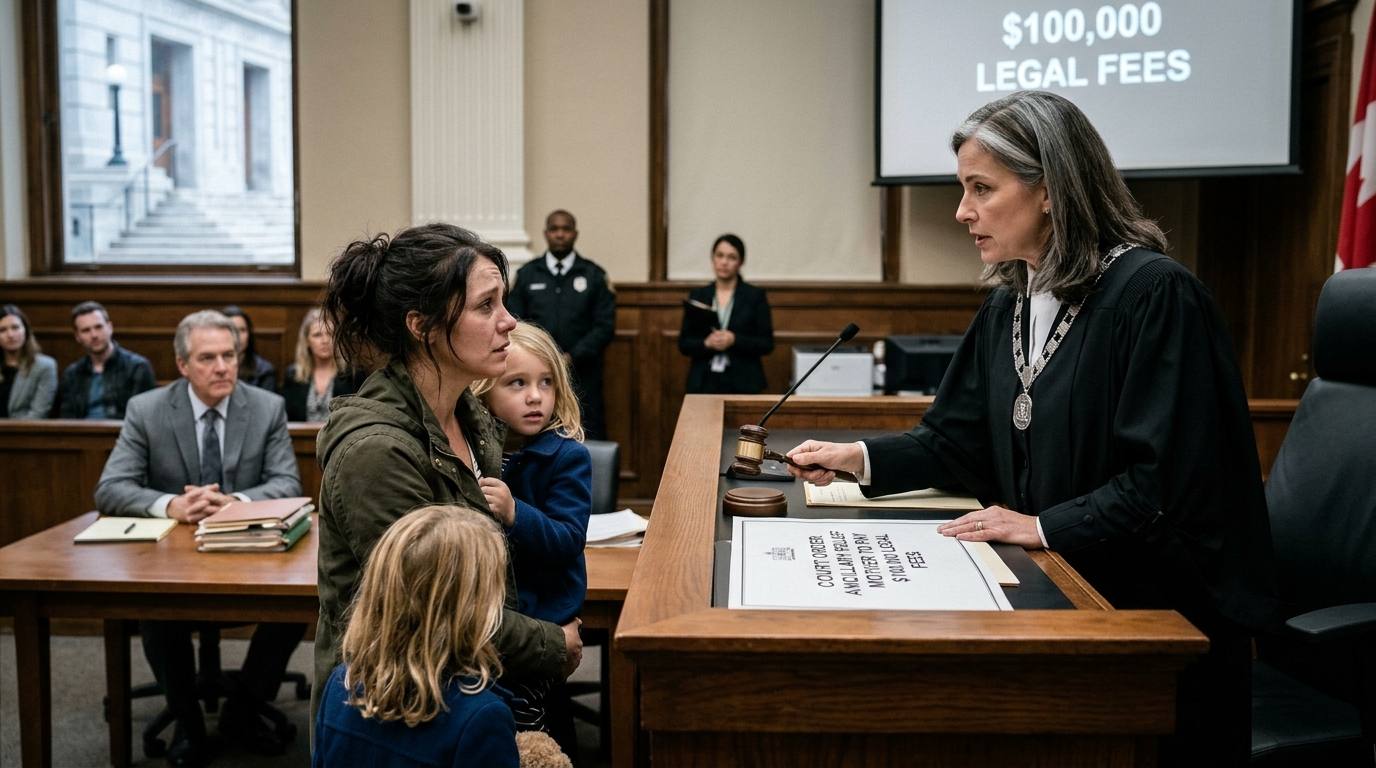
Family Courts in Canada are Not All Alike: The Hidden Financial Traps That Make Ontario Family Court So Terrifying
3 minute readWhen people enter the family court system, they usually expect the battle to be about property, support, or parenting time. But in high-conflict litigation, one of the most powerful—and dangerous—weapons is the rule governing "costs".
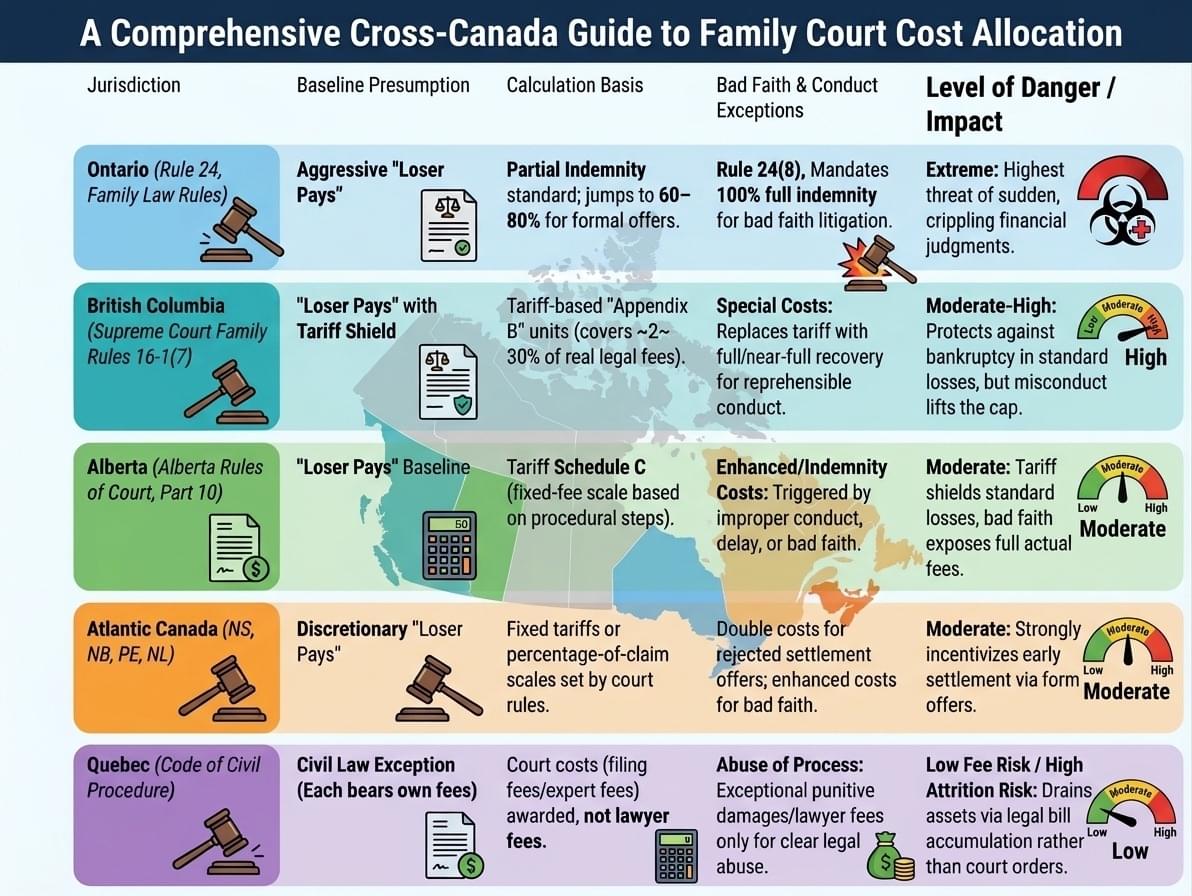
Across Canada, being forced to pay for the opposing parties legal bills sits on a wide spectrum. While common-law provinces share the baseline presumption that "costs follow the event" (the winning party recovers costs from the losing party), how that rule is applied varies dramatically. Some provinces use statutory caps to prevent financial ruin, while others modify fee rules when children are involved. Ontario does neither.
Understanding where your jurisdiction falls on this spectrum is critical for evaluating legal risk, crafting settlement strategy, and avoiding catastrophic financial outcomes.
2. Deep Dive: Key Provincial Variations
Ontario: The High-Stakes "Loser Pays" Arena
Ontario operates the most aggressive cost-recovery system in Canada. Under Rule 24 of the Family Law Rules, the starting assumption is that the successful party is entitled to their costs.
Settlement Offer Pressure: If a party makes a formal settlement offer under Rule 18 that is rejected, and subsequently achieves a result at trial as good as or better than their offer, they are typically awarded substantial indemnity (recovering 60% to 80% of actual legal fees) from the date of the offer.
The Bad-Faith Nuclear Option: Rule 24(8) mandates that if a party acts in bad faith—such as hiding assets, fabricating allegations, or intentionally stalling litigation—the court must order full indemnity (100% of the other party's actual legal costs).
British Columbia: The Tariff Shield & Special Costs
British Columbia uses a hybrid model designed to protect reasonable litigants while retaining a hammer for severe misconduct.
The Appendix B Buffer: Standard costs are calculated using "units" under Appendix B of the Supreme Court Family Rules. Because these statutory amounts are fixed, a standard cost award usually covers only 20% to 30% of a party's actual lawyer fees. This creates a protective buffer against financial destruction for a party who loses a good-faith dispute.
Special Costs for Misconduct: If a party engages in "reprehensible" behavior (deceit, obstruction, or malicious litigation), BC courts lift the Appendix B cap and award Special Costs, shifting recovery to 80–90%+ of actual legal bills.
Alberta: Schedule C Tariffs & Conduct Enhancements
Alberta family law starts with the presumption that costs follow the event, but relies on a structured tariff framework.
Schedule C Mechanics: Costs are assessed according to Schedule C of the Alberta Rules of Court, which assigns fixed dollar amounts to specific litigation steps based on trial length and complexity.
Conduct Modifiers: Judges frequently multiply Schedule C amounts (e.g., 2x or 3x Schedule C) or order full solicitor-client indemnity when a litigant fails to provide financial disclosure, breaches court orders, or unreasonably rejects settlement proposals.
Quebec: The Civil Law Exception
Quebec’s civil law system handles litigation costs differently from the rest of the country.
Default Position: Winning a family law case in Quebec generally does not mean the losing party pays your lawyer. "Costs" (dépens) strictly cover administrative fees (filing fees, court reporter costs, expert witness fees).
Abuse of Process (Article 51 CCP): Lawyer fees are awarded against an opposing party only under extraordinary circumstances where litigation is proven to be an abuse of process or clear legal malice.
3. The National Divide: Child Custody vs. Property Disputes
While financial and property claims strictly enforce the "loser pays" principle across common-law Canada, parenting and child custody disputes create a distinct judicial split:
The Strict Deterrence View (Ontario, BC, AB): Courts often maintain cost consequences in parenting disputes to deter litigants from using children as leverage or dragging out unmeritorious custody battles.
The Tempering View (Judicial Discretion): Judges across all provinces retain inherent discretion to reduce or eliminate a cost award in parenting matters if forcing a parent to pay would deplete the financial resources available to support the children, or if both parents put forward reasonable, good-faith parenting proposals.
4. Key Takeaways for Litigants
Know Your Regional Exposure: In Ontario, taking an unmeritorious position to trial can result in a bankrupting six-figure cost order. In BC or Alberta, statutory tariffs offer partial protection for standard losses, but egregious behavior will blow past those caps.
Settlement Offers Are Tactical Tools: In every common-law province, formal, written offers to settle carry immense legal weight. Rejecting a fair offer and getting an equal or worse result at trial is the fastest way to trigger heavy cost shifting.
Bad Faith Is an Expensive Gamble: Dishonesty, non-disclosure, and procedural obstruction are the universal triggers that convert standard tariff limits into full indemnity penalties nationwide.